Concrete Repair in Greeley, CO: Cracks, Spalling, Sinking
Learn how to identify and repair common concrete issues in Greeley, CO. Get expert tips and methods to extend the life of your concrete surfaces.
Get a Free Concrete Quote
Serving Greeley, Colorado and surrounding Weld County communities.
Prefer to talk? Call 970-616-6334
Types of Concrete Damage
Concrete is vulnerable to various forms of damage over time due to climate, usage, and environmental factors. In Greeley, the most common types of concrete damage include:
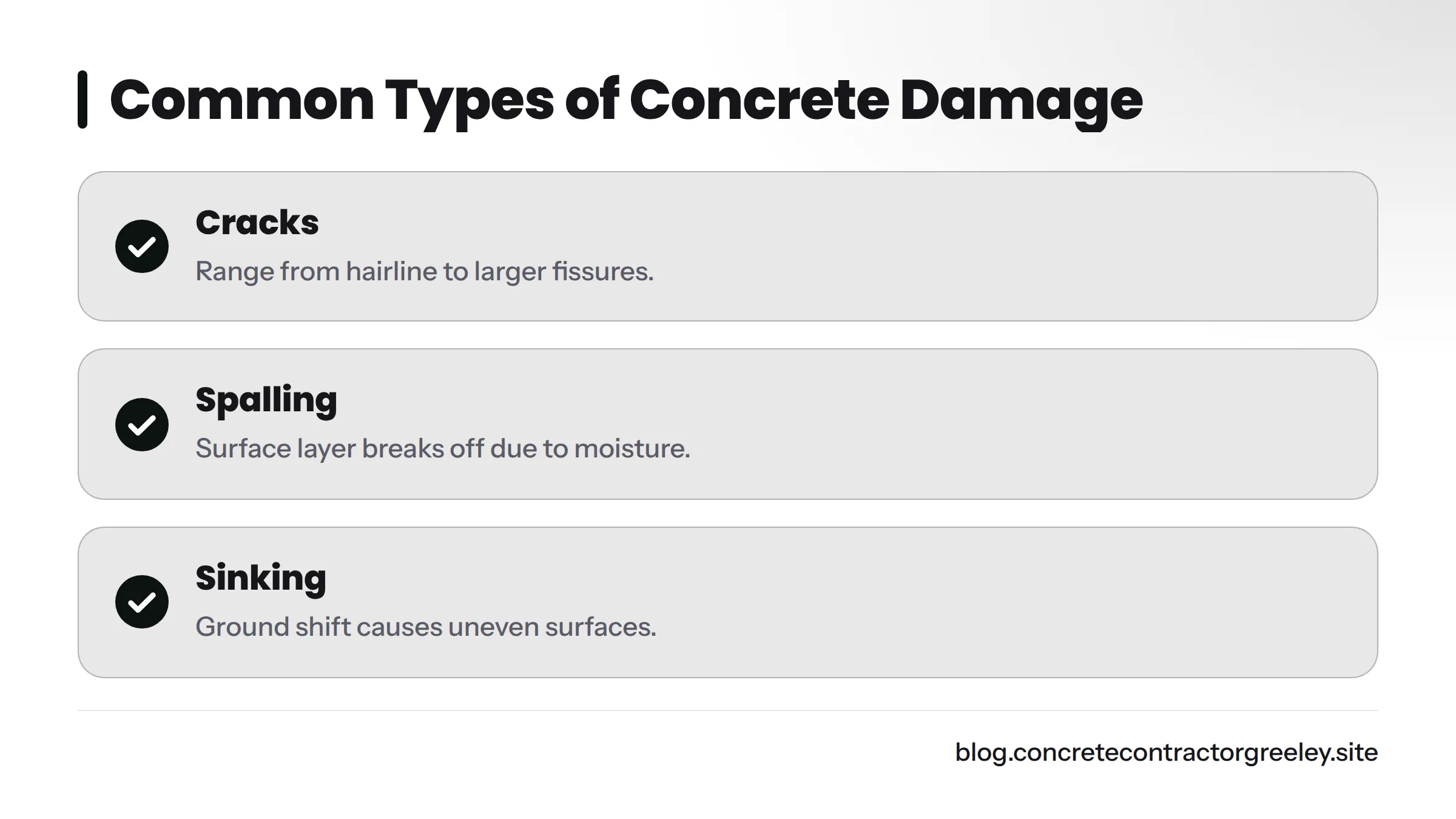
- Cracks: These range from small hairline fractures to larger fissures that may indicate deeper foundation issues.
- Spalling: This phenomenon occurs when the surface layer of concrete breaks off, often due to moisture and freeze-thaw cycles.
- Sinking: Also known as settling, sinking happens when the ground beneath the concrete shifts or compacts, leading to uneven surfaces.
Recognizing these types of damage is crucial for homeowners to address issues promptly and effectively.
Signs You Need Concrete Repair
Early identification of concrete damage can save significant repair costs. Look for the following indicators:
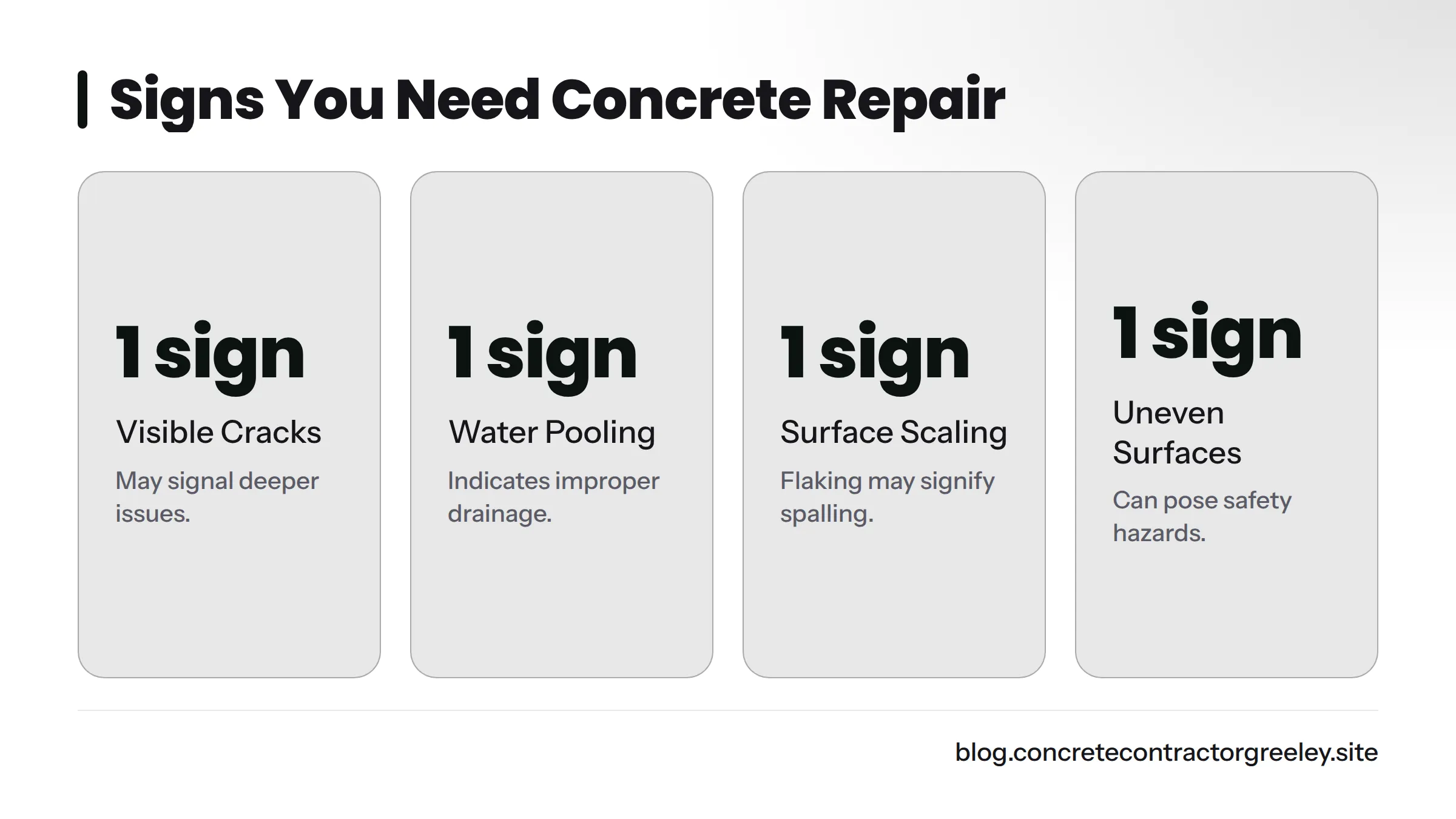
- Visible Cracks: Noticeable cracks in driveways or foundations may signal deeper issues.
- Water Pooling: Standing water on concrete surfaces can indicate improper drainage or sinking.
- Surface Scaling: Flaking or crumbling surfaces may signify spalling.
- Uneven Surfaces: Areas that sag or lift can pose safety hazards and require immediate evaluation.
If you see any of these signs, consider hiring a professional concrete contractor in Greeley for repairs.
Methods of Concrete Repair
Concrete repair in Greeley involves effective methods tailored to the type of damage:
- Epoxy Injection: Ideal for repairing cracks, epoxy injections fill voids and bond surfaces together.
- Patching: For surface spalling, a patching compound can restore integrity.
- Mudjacking: This technique lifts sinking concrete slabs by injecting a mixture beneath the slab to raise and level it.
- Sealants: Applying sealants can protect concrete from future damage and moisture invasion.
The Concrete Repair Process
The typical repair process follows these steps:
- Assessment: Professionals evaluate the damage type and extent.
- Preparation: The area is cleaned, and debris is removed to ensure proper bonding.
- Application: Chosen repair methods (like epoxy or patching) are applied.
- Curing: The repaired area must cure properly, ensuring strong adhesion and durability.
- Final Inspection: After curing, the area is checked for quality assurance.
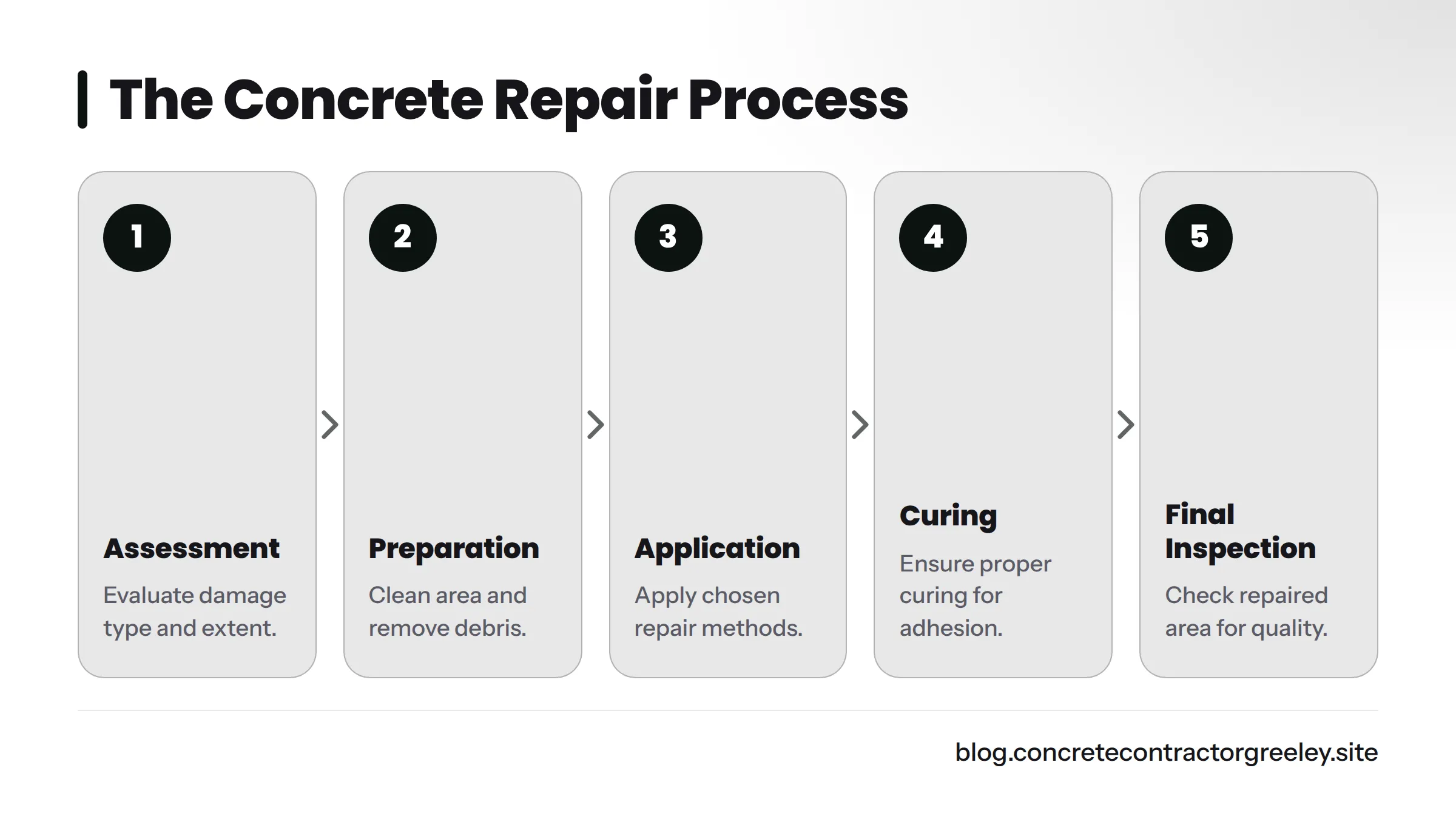
Following these steps allows professional contractors to effectively restore concrete to its original state.
Benefits of Professional Repair
Choosing professional concrete repair offers several advantages:
- Expertise: Professionals possess the knowledge and skills to accurately diagnose and repair issues.
- Safety: Proper repairs can prevent accidents caused by uneven surfaces or structural weaknesses.
- Long-Term Results: Quality materials and techniques ensure repairs last longer.
- Time-Saving: Experts can complete repairs quickly and efficiently, avoiding the hassles of DIY solutions.
When to Repair vs. Replace
Deciding whether to repair or replace concrete depends on:
- Extent of Damage: Minor cracks can typically be repaired, while extensive spalling or sinking may necessitate replacement.
- Age of the Concrete: Older concrete may deserve replacement if significant issues are present.
- Budget Considerations: Evaluate costs versus benefits; repairs can often be more economical in the long run.
Consulting with professionals is essential to determine the best action.
Gallery of Concrete Repair Projects
Seeing is believing! Here are transformative before-and-after examples of completed concrete repair projects:
- Residential Driveway Repairs
- Foundation Crack Fixes
- Commercial Space Resurfacing
Each project illustrates how timely and quality repairs can enhance safety and aesthetic appeal.
Get a Free Quote for Concrete Repair
Are you ready to tackle your concrete issues? Reach out to local contractors in Greeley for a free consultation and quote. Investing in professional repairs can safeguard your property against future damage.
Frequently Asked Questions
Should I repair or replace cracked concrete?
Minor cracks that do not indicate serious structural problems can usually be repaired. Significant damage, however, may require a full replacement.
Why does concrete crack in Greeley?
Greeley's climate leads to freeze-thaw cycles that stress concrete, combined with soil movement and insufficient drainage.
How long does a concrete repair last?
With appropriate techniques and materials, concrete repairs can last several years, occasionally even decades, depending on conditions.
Can concrete be repaired in cold weather?
Yes, but it demands careful techniques and materials designed for low temperatures to ensure proper curing.
What are the most common causes of concrete damage?
Major causes include freeze-thaw cycles, moisture intrusion, soil settlement, and heavy loads.
Are concrete repairs worth the investment?
Definitely! Proper repairs enhance safety and prolong the usability of your concrete structures.
Do I need a permit for concrete repairs?
Typically, permits are required for extensive repairs or replacements, so always check with local regulations in Greeley before starting work.
How do the weather conditions in Greeley impact concrete lifespan?
Moisture from snow and rain, along with temperature fluctuations, can diminish concrete integrity, making timely repairs essential.
By prioritizing concrete repairs, homeowners in Greeley can maintain the safety and appearance of their properties. Don’t hesitate to seek professional help!
Sources
Planning a Concrete Project in Greeley?
Local contractors in our network pour driveways, patios, slabs, and stamped concrete built for Colorado's freeze-thaw cycles.
Get a Free Quote